

Six sessions done. Patchwork results. No explanation from the clinic.
This happens more often than it should and almost always, the reason comes down to a few things nobody bothered to explain upfront. Not before booking, not during consultation, not after session one.
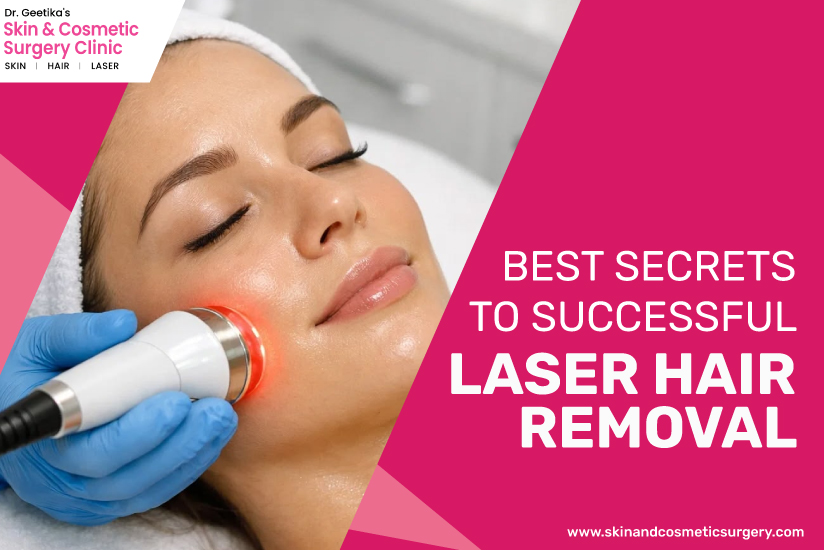
Laser Hair Removal in Mohali is genuinely effective when done right. But “done right” involves more than just sitting through sessions. Here’s what most people figure out too late.
Do a Patch Test. Non-Negotiable.
A patch test is not a formality.
It’s a small laser treatment on a tiny area – inner arm, behind the ear, somewhere discreet. You come back after 48 hours. The doctor checks how your skin reacts. Then, and only then, settings are confirmed for your full sessions.
Why It Actually Matters
Indian skin tones vary a lot. What works for a Type III Fitzpatrick skin doesn’t automatically work for a Type V. A patch test tells your doctor whether the planned energy level is safe for your specific skin, before a whole body area is treated.
Skipping it doesn’t speed things up. If your skin reacts badly in session one, you’re dealing with pigmentation on a large area instead of a small test patch. That’s the tradeoff.
Any good skin specialist in Mohali will not skip this step. If a clinic does, don’t second-guess your instinct to walk out.
Your Medications Are Relevant. All of them.
Intake forms ask about health conditions. They rarely push hard enough on medications.
Some drugs change how your skin handles laser light entirely and using a laser without knowing this causes burns, hyperpigmentation, or uneven results that have nothing to do with the technology or the technician.
Tell Your Doctor About These Specifically
Accutane (isotretinoin): A hard stop. Laser is not safe during a course of isotretinoin, or for at least six months after. Skin on this drug is too fragile for laser energy.
Tetracycline antibiotics like doxycycline or minocycline increase photosensitivity significantly. Even finishing a course two weeks ago is worth mentioning.
Contraceptive pills and hormone therapy affect hair growth patterns. If you start or stop these mid-course, your dermatologist in Mohali needs to know – it changes the treatment plan.
Topical retinoids – tretinoin, retinol serums – thin the skin barrier. Stop using them on the treatment area at least a week before each session.
None of this disqualifies you from treatment. It just changes the timing and approach.
Each Body Area Has Its Own Rules
Face settings are not the same as leg settings. Underarm protocols are not the same as back protocols.
Hair thickness, follicle depth, skin sensitivity, and hair growth cycles all change depending on the area. Session spacing changes too.
What Differs, Area by Area
Upper lip and face: Facial hair cycles are faster. Sessions every 4 to 5 weeks work best. Because facial skin is reactive, energy stays on the lower end. More sessions overall but shorter gaps.
Underarms and bikini: Hair here is coarser, but the skin is sensitive. Some redness after a session is normal. It typically settles within a day.
Legs and back: Slower hair cycles, larger surface area. 6 to 8 weeks between sessions is standard. Expect more total sessions than smaller zones.
If a clinic runs the same settings and schedule across every zone on your body, that’s a gap worth raising. Zone-specific protocols matter for results.
“Permanent Removal” Is a Misleading Phrase
Laser hair removal doesn’t remove all hair forever.
That’s not a flaw in the treatment. It’s just not how it works and the confusion around this phrase causes a lot of frustration.
What laser does is permanently reduce hair growth. A full course typically results in 70 to 90 percent reduction. Some hair may return over the years, especially after hormonal shifts – pregnancy, menopause, stopping birth control.
Setting the Right Benchmark
Hair that does return tends to be finer and lighter. One or two top-up sessions a year is usually enough to maintain results.
Going in expecting “zero hair, forever” leads to disappointment after a single stray strand appears two years later. Going in expecting “80% less hair, permanently thinner regrowth” means you’ll be happy with results that are genuinely excellent.
Mohali’s Summer Is Working Against You
April to September in Mohali means strong UV, high temperatures, and heavy sweating. All three are problems for post-laser skin.
Freshly treated skin is more UV-sensitive than usual. Sweat on treated follicles increases the risk of irritation and bacterial issues. And intense heat makes skin slower to recover between sessions.
October to March Is the Smarter Window
Starting Laser Hair Removal in Mohali in cooler months isn’t just a comfort preference, it’s a clinical one.
Skin heals faster. UV exposure is lower. Sessions can be spaced optimally without sun-related setbacks. And completing your course before April means you’re done before the worst of summer starts.
If you’re starting in summer, your skin specialist in Mohali should be adjusting energy settings downward, requiring strict daily SPF, and spacing sessions with extra care. SPF 30 minimum – not just on session days, every day throughout the full course.
What You’re Seeing After a Session Isn’t What You Think
First and second sessions often look like they didn’t work.
Hair appears to be growing back. It might even look thicker for a few days. A lot of patients assume the laser failed. Most of the time, that’s not what’s happening.
Hair Shedding vs. Hair Growing
After a successful session, treated hairs push out of the follicle over 1 to 3 weeks. This looks like growth. It isn’t. The follicle has been damaged – this is just the hair exiting.
A simple way to track real progress: photograph the same area before every session. Same lighting, same angle. Compare session one against session five. Day-to-day, the change looks slow. In photos across 5 months, it’s clear.
Also track how long it takes for hair to reappear after each session. That window getting longer is the most reliable sign the treatment is working, regardless of what the mirror tells you week to week.
For a clearer picture of what results look like across a full treatment course, read our guide on evaluating the effectiveness of laser hair removal.
The Person Behind the Machine Changes Everything
The laser doesn’t read your skin. The doctor does.
Between sessions, a lot can change – you caught sun on a holiday, started a new face cream, your hormones shifted. An experienced dermatologist in Mohali notices these things and adjusts. A technician following a fixed protocol doesn’t have the training to.
At Dr. Geetika’s Skin & Cosmetic Surgery Clinic in Mohali, every patient is assessed properly before sessions begin – skin type, hair pattern, medical history, and hormonal background reviewed together.
Laser Hair Removal in Mohali here uses multi-wavelength technology suited to Fitzpatrick skin Types I through VI, with settings that are personalised and tracked across each visit.
Dr. Geetika Paul brings over 10 years of dermatology experience to every treatment plan. This isn’t a one-size-fits-all protocol.
Before booking anywhere, it’s worth reading how to choose the right clinic for laser hair treatment – the differences between clinics matter more than most people realise before their first session.
To book a consultation directly, get in touch with our team today.
Frequently Asked Questions
Q1. How many sessions will I actually need?
Ans. Somewhere between 6 and 10 for most people. Body area, hair type, skin tone, and any hormonal conditions all affect this. Sessions are spaced 4 to 8 weeks apart depending on the zone. No clinic can give you a definitive number at consultation – they can give you a realistic estimate.
Q2. Does laser hair removal in Mohali hurt?
Ans. Most people describe it as a rubber-band snap with heat. The upper lip and bikini line are the most uncomfortable. Legs and back are far more manageable. Clinics use cooling systems during sessions, which helps a lot. It’s not pain-free, but it’s also not what most people fear before the first session.
Q3. I’ve done 4 sessions and still see a lot of hair. Is something wrong?
Ans. Not necessarily. Results aren’t linear. Early sessions treat a percentage of follicles in the active growth phase. Later sessions treat the rest. Many patients see the biggest visible change between sessions 4 and 7 – not before. If you have PCOS or another hormonal condition, more sessions are normal. Have an honest conversation with your doctor rather than quitting mid-course.
Q4. Will the laser cause permanent darkening on my skin?
Ans. Permanent darkening is rare. Post-treatment pigmentation does happen – the main cause is sun exposure right after a session. Using SPF 30 or higher every day from session one onwards prevents most cases. When the right laser is matched to your skin tone and settings are accurate, this risk drops significantly.
Q5. Can I wax or thread between sessions?
Ans. No. Shaving is the only method allowed between sessions. Waxing, threading, and plucking physically remove the hair root – the exact thing the laser needs to be present. Shaving leaves the root intact. Stick to shaving only, and avoid it in the 24 hours directly before your session.
Q6. Is it safe to start laser treatment while on hormonal medication?
Ans. Generally yes, but your doctor needs to know. Hormonal medications can change hair growth patterns during your course – new growth appears in areas that were already treated. It doesn’t make the laser ineffective. It does change how many sessions you need and how results are tracked. Disclose everything before session one.