

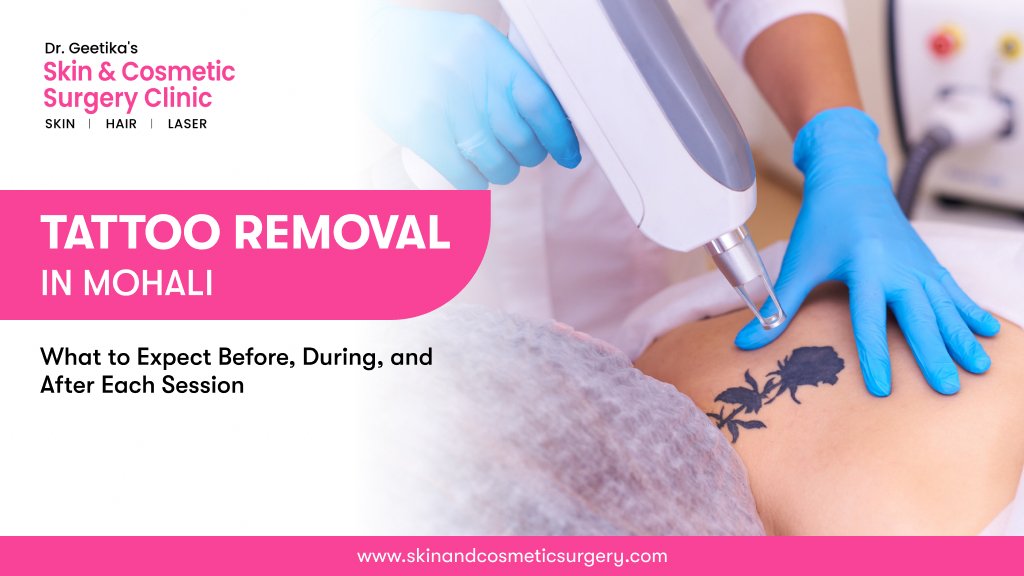
If you are considering tattoo removal in Mohali, understanding the treatment process is more useful than simply knowing that laser removal is available. Tattoo ink is deposited at different depths within the skin, pigments respond differently to laser energy, and the skin needs time between sessions to recover and clear fragmented pigment.
At Dr. Geetika Skin & Cosmetic Surgery Clinic, laser tattoo removal is approached according to the tattoo’s characteristics and the patient’s skin. The clinic’s treatment approach includes advanced laser technology such as Q-switched and picosecond lasers, which are designed to target tattoo pigments while limiting unnecessary exposure of the surrounding skin.
This guide explains what happens before, during, and after a tattoo-removal session and why results develop gradually rather than immediately.
Why Tattoo Removal Is Not an Instant Process
A tattoo is not simply sitting on the surface of the skin. Tattoo pigment is introduced into the skin, primarily within the dermal layer, where pigment particles can remain for years.
Laser tattoo removal therefore works differently from treatments that remove superficial pigmentation. The objective is to deliver laser energy to the tattoo pigment and break larger pigment particles into much smaller fragments. The body’s immune system can then gradually remove and process those fragments.
This is also why the tattoo does not simply disappear when you leave the clinic. The laser initiates the pigment-fragmentation process, while the subsequent fading develops during the weeks between treatments.
What Happens Before a Tattoo Removal Session?
The process begins with an assessment rather than immediately applying laser energy. Consulting a skin specialist in Mohali can help determine whether laser tattoo removal is appropriate for your tattoo, skin tone, and current skin condition.
The clinician needs to evaluate:
- Tattoo size and location
- Ink colors and overall pigment density
- Whether the tattoo is amateur, professional, cosmetic, or traumatic
- Approximate pigment depth
- Skin tone and current skin condition
- Previous tattoo-removal treatments
- Recent sun exposure or tanning
- Any irritation, infection, or active inflammation around the treatment area
- Relevant medications, supplements, or medical factors that may affect treatment or healing
Skin tone is particularly important because laser energy must be selected carefully to minimize unwanted interaction with the skin’s natural melanin.
Preparing Your Skin
Limiting sun exposure to the tattooed area before laser skin treatment is advised. This is important because recently tanned or sun-irritated skin can be more reactive to laser energy.
If the skin around the tattoo is irritated, inflamed, or otherwise unsuitable for treatment, the clinician may decide that the area needs to settle before proceeding.
What Happens During a Laser Tattoo Removal Session?
Before the laser is applied, the treatment area is assessed and prepared. The laser is then passed over the tattoo using controlled pulses.
The sensation is commonly described as a series of quick snaps or a warm elastic band striking the skin. The intensity of discomfort can vary according to the tattoo’s location, size, pigment density, and the individual’s sensitivity. The clinic describes this snapping or elastic-band sensation as typical during treatment.
The laser does not remove the entire tattoo in a single pass. Instead, it delivers energy to the pigment so that the ink particles can be fragmented.
The treatment parameters need to balance two objectives:
- Delivering sufficient energy to affect the tattoo pigment.
- Limiting unnecessary thermal or mechanical injury to surrounding skin.
That balance is particularly important when treating darker skin tones, where excess interaction with melanin can increase the risk of unwanted pigmentation changes.
What to Expect Immediately After Treatment
One of the most noticeable responses during laser tattoo removal is temporary frosting, when the treated tattoo develops a whitish or pale appearance immediately after the laser pulse. This occurs because of a rapid localized reaction within the treated tissue and is a normal short-term treatment response. It does not mean that the tattoo has been completely removed.
The area may also become red, warm, mildly swollen, raised, or tender. In some cases, pinpoint bleeding can occur. These effects generally reflect the skin’s immediate response to laser energy rather than the final treatment outcome.
How Many Sessions Are Needed?
Laser tattoo removal usually requires multiple sessions. A typical treatment course may involve approximately 4 to 12 sessions, with around 4 to 6 weeks between treatments, although individual requirements vary.
Factors that influence the treatment timeline include:
- Tattoo size, depth, and location
- Ink color and pigment density
- Number of colors used
- Amateur or professional application
- Skin tone
- Previous removal attempts
- Individual healing and pigment-clearance response
A small, lightly pigmented tattoo may respond differently from a dense, multicolored professional tattoo.
Can Tattoo Removal Be Performed on Darker Skin?
Yes, but treatment requires careful parameter selection. Natural melanin can also interact with laser energy, so the laser approach must balance effective pigment targeting with protection of the surrounding skin. Skin tone, tattoo color, and pigment depth should therefore be considered together when planning treatment.
What Results Should You Expect?
The realistic goal is progressive fading rather than instant removal. Some tattoos respond more readily than others, and complete clearance cannot be guaranteed for every pigment or tattoo.
Consistent aftercare, sun protection, appropriate spacing between sessions, and allowing the skin to fully recover all contribute to a safer treatment process. If pain, swelling, redness, or irritation becomes increasingly severe rather than gradually settling, professional assessment is appropriate.
What Happens Immediately After Laser Tattoo Removal?
One of the most noticeable responses during laser tattoo removal is temporary frosting, when the treated tattoo develops a whitish or pale appearance immediately after the laser pulse. This occurs because of a rapid localized response to the laser energy and is a normal short-term treatment effect. It does not mean that the tattoo has been completely removed.
The area may also become red, warm, mildly swollen, raised, or tender. In some cases, pinpoint bleeding can occur. These reactions reflect the skin’s immediate response and should not be confused with the final result.
Aftercare: What Should You Do After Treatment?
Proper aftercare supports normal healing between sessions. Keep the treated area clean and follow the recommended wound-care instructions. Cooling the area with an ice pack may help with temporary warmth or discomfort when advised.
Avoid picking or scratching scabs, rubbing the area, exposing it to direct sunlight, or applying products that have not been recommended. Minimize unnecessary friction while the skin is healing, and use appropriate sun protection after the area has recovered.
If pain, swelling, redness, or irritation becomes increasingly severe rather than gradually settling, seek professional assessment.
How Many Sessions Are Needed?
Laser tattoo removal generally requires multiple sessions. A typical treatment course may involve approximately 4 to 12 sessions, with around 4 to 6 weeks between treatments, although individual requirements vary.
Factors that influence the treatment timeline include:
- Tattoo size, depth, and location
- Ink color and pigment density
- Number of colors used
- Amateur or professional application
- Skin tone
- Previous removal attempts
- Individual healing and pigment-clearance response
A small, lightly pigmented tattoo may respond differently from a dense, multicolored professional tattoo.
Start Your Tattoo Removal Process in Mohali
Tattoo removal in Mohali is a gradual process that requires the right laser approach, appropriate treatment intervals, and consistent aftercare. Because tattoo pigment, depth, color, size, and skin tone can all influence the response, treatment should be planned around your individual skin and tattoo rather than a standard protocol.
At Dr. Geetika Skin & Cosmetic Surgery Clinic, tattoo removal is approached with advanced Q-switched and picosecond laser technology, with treatment parameters selected according to the tattoo and skin being treated.
If you are unhappy with an unwanted tattoo or want to fade it before a cover-up, book a consultation with Dr. Geetika to have your tattoo assessed and discuss a personalized laser tattoo removal plan.
FAQs About Tattoo Removal
Q1. Is tattoo removal painful?
Ans. Some discomfort is expected. Most patients describe it as quick snapping or heat on the skin. Dr. Geetika Skin & Cosmetic Surgery Clinic plans each session around the treatment area, which helps keep the process controlled.
Q2. How many sessions does tattoo removal usually take?
Ans. It varies by tattoo type, ink color, size, depth, and healing response. Many patients may need four to twelve sessions with recovery time between visits.
Q3. How long should I wait between sessions?
Ans. You should wait until the skin has recovered and the clinic confirms the area is ready. Dr. Geetika Skin & Cosmetic Surgery Clinic spaces sessions to allow healing and continued ink clearance.
Q4. Can all tattoo colors be removed completely?
Ans. Not every tattoo fades at the same rate or to the same endpoint. Dark inks, multicolor tattoos, cosmetic pigments, and deeper professional work can respond differently, so assessment should come before promises.
Q5. What should I avoid after each session?
Ans. Avoid direct sun, picking scabs, unnecessary friction, and any product your provider asks you to pause. Following aftercare instructions supports smoother healing between visits.