


Hair fall in women is often brushed aside as just stress or just seasonal shedding, until a woman notices her ponytail getting visibly thinner, or her scalp showing through at the parting. If this sounds familiar, you’re not alone. At Dr Geetika’s Skin & Cosmetic Surgery Clinic in Mohali, female hair loss is one of the most common concerns walking through the door, and PRP treatment in Mohali has become one of the most trusted, non-surgical ways to address it.
This blog breaks down what PRP treatment is, why women’s hair loss needs a different approach than men’s, what actually happens during a session, and what results you can realistically expect.
What Is PRP Treatment, and What Is It Used For?
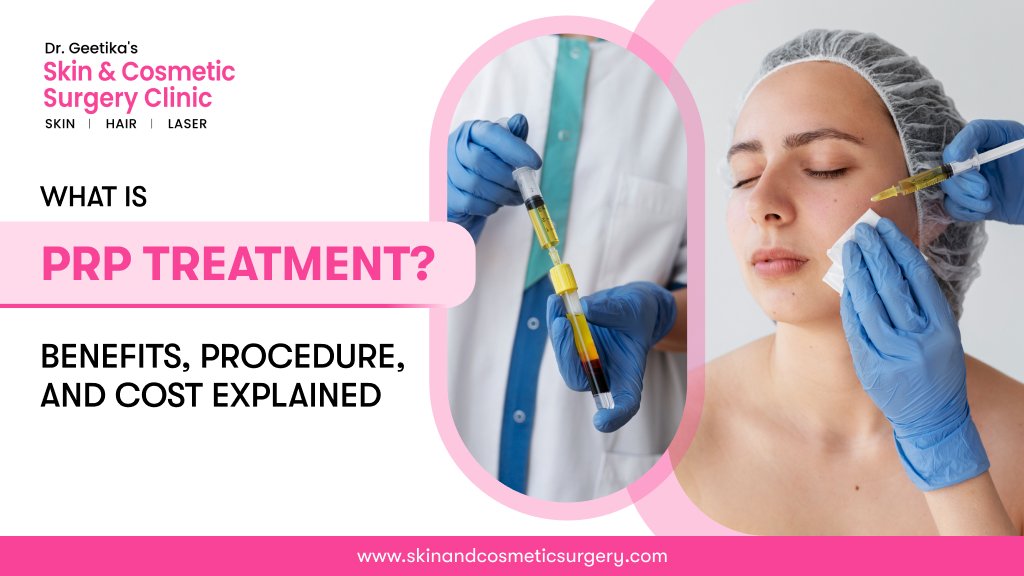
PRP stands for Platelet-Rich Plasma. In simple terms, PRP treatment involves drawing a small amount of your own blood, spinning it in a centrifuge to separate the platelet-rich portion, and then injecting that concentrated plasma back into the scalp.
Platelets carry growth factors, natural signalling proteins that tell the body to repair and regenerate tissue. When injected into the scalp, these growth factors nudge weak, dormant hair follicles back into an active growth phase. That’s the core use of PRP treatment for hair: not adding anything foreign to your body, but using your own blood’s healing components to wake up follicles that have slowed down or gone dormant.
Because it uses your own blood, PRP treatment carries a very low risk of allergic reaction, which is part of why it has become a preferred first step for many women before considering more invasive options.
Why Does Female Hair Loss Need a Different Approach?
Male and female hair loss often get lumped together, but the underlying causes are usually quite different, and that difference matters for treatment.
In women, hair thinning is commonly linked to:
- Postpartum hair loss: a temporary but often alarming shedding phase, usually 2–4 months after delivery
- PCOS and hormonal imbalance: a very common cause of thinning seen in the Tricity region among younger women
- Thyroid disorders: both hypothyroidism and hyperthyroidism can trigger diffuse hair fall
- Iron deficiency and low ferritin: extremely common in Indian women and frequently overlooked
- Telogen effluvium: sudden, stress- or illness-triggered shedding
- Female pattern hair loss (androgenetic alopecia in women): thinning that spreads across the crown rather than receding at the hairline, unlike the typical male pattern
Because women’s hair loss is rarely a single, simple cause, a proper diagnosis matters more here than a one-size-fits-all treatment. This is one reason more women are choosing PRP treatment in Mohali under a qualified dermatologist rather than a walk-in aesthetic centre. Blood work and a scalp examination often need to happen before PRP is even recommended.
How Does PRP Help with Female Pattern Hair Loss?
PRP works by improving blood supply to hair follicles and extending the growth (anagen) phase of the hair cycle. For women dealing with diffuse thinning or early female pattern hair loss, this can mean:
- Thicker-feeling hair over a few months
- Reduced hair fall during washing and combing
- Improved hair density, especially along the parting and crown
- A visibly fuller scalp in before-and-after photos taken under consistent lighting
It’s worth being honest here: PRP is not a miracle cure, and it doesn’t work identically for everyone. It tends to work best when hair loss is caught early and when any underlying hormonal or nutritional cause is being managed alongside it; not instead of it.
What Happens During a PRP Session and How Long Does It Take?
A single PRP session is a fairly quick, outpatient procedure. Here’s the general process:
- A small vial of blood is drawn from your arm, similar to a routine blood test.
- The blood is spun in a centrifuge for about 10–15 minutes to separate the platelet-rich plasma.
- A numbing cream is applied to the scalp to minimise discomfort.
- The concentrated plasma is injected into the areas of thinning using a fine needle.
From start to finish, most sessions take around 45 minutes to an hour, including the numbing time. There’s no surgery, no incisions, and no general anaesthesia involved. Most women return to their routine, such as office, college, or household work, the same day, with only mild scalp tenderness for a day or two.
Is PRP Safe for Women? Who Should Avoid It?
PRP is generally considered safe since it uses your own blood. That said, it isn’t right for everyone. Women with the following conditions should discuss alternatives with their dermatologist:
- Active scalp infections
- Low platelet count or blood clotting disorders
- Pregnancy or breastfeeding (in most clinical protocols)
- Certain blood-thinning medications
- Uncontrolled diabetes
A proper consultation, ideally with basic blood tests, helps rule these out before starting treatment.
How Many Sessions Are Needed, and When Will You See Results?
Most women need 4-6 initial sessions, usually spaced 4-6 weeks apart, followed by maintenance sessions every 4-6 months. Visible improvement, such as less hair fall and a bit more volume, is typically noticed around the 3-month mark, with fuller results by month 6.
Some women experience a short phase of slightly increased shedding in the first few weeks. This is usually a normal part of the hair cycle resetting and not a sign the treatment isn’t working, but it’s worth mentioning to your dermatologist if it concerns you.
How Much Does PRP Treatment Cost?
PRP treatment cost in India generally depends on the area treated, the number of sessions needed, and the technique used by the clinic. As a rough guide, PRP sessions for hair typically range from a few thousand rupees per sitting, with packages working out more economical than paying per session. Costs can vary based on whether a single-spin or double-spin technique is used and whether the session is performed by the dermatologist directly.
For an exact, personalised cost estimate based on your degree of hair thinning, it’s best to book a consultation rather than rely on a generic online figure since pricing genuinely varies from woman to woman depending on the areas involved.
PRP Treatment in Mohali: Why Location and Expertise Matter
Tricity women across Mohali, Chandigarh, Panchkula, and Zirakpur are increasingly choosing PRP over harsher chemical treatments because it’s simple, uses no external drugs, and fits around busy work and family schedules. But results depend heavily on who’s administering it.
At Dr Geetika’s Skin & Cosmetic Surgery Clinic in Mohali, an experienced dermatologist performs PRP treatment under supervision, with a proper scalp assessment and, when needed, blood work to identify the cause of hair loss before treatment begins. This matters because two women with the same amount of visible hair fall can have completely different underlying causes and therefore need different treatment plans.
If you’re a woman in Mohali or the wider Tricity area noticing thinning hair, wider partings, or excessive hair fall while washing or combing, a proper diagnosis is the right first step. PRP may be part of the solution, but only once the “why” behind your hair loss is understood.
Frequently Asked Questions
Q1. What is PRP treatment for hair loss in women?
Ans. PRP treatment uses platelet-rich plasma from your own blood, injected into the scalp to stimulate weak or dormant hair follicles and encourage thicker, healthier hair growth. Many women opting for PRP treatment in Mohali choose it specifically because it’s non-surgical and uses no external drugs or chemicals.
Q2. Is PRP treatment painful?
Ans. Most women feel only mild discomfort, as a numbing cream is applied to the scalp before injections. Any soreness usually settles within a day or two.
Q3. How long does a PRP treatment session take?
Ans. A typical session takes around 45 minutes to an hour, including blood draw, processing, and injection time.
Q4. How much does PRP treatment cost in India?
Ans. Cost depends on the area treated and number of sessions required, and varies clinic to clinic. It’s best to get a personalised quote after a consultation rather than relying on a general figure.
Q5. Can PRP help with postpartum hair loss?
Ans. Yes, PRP is commonly used to support hair regrowth after postpartum shedding, though most postpartum hair loss also improves naturally over time. A dermatologist can advise whether PRP is needed in your case.
Q6. Is PRP a permanent solution for female hair loss?
Ans. PRP isn’t a one-time permanent fix; it typically requires an initial series of sessions followed by periodic maintenance to sustain results, especially if the underlying cause (like PCOS or thyroid imbalance) is ongoing.