

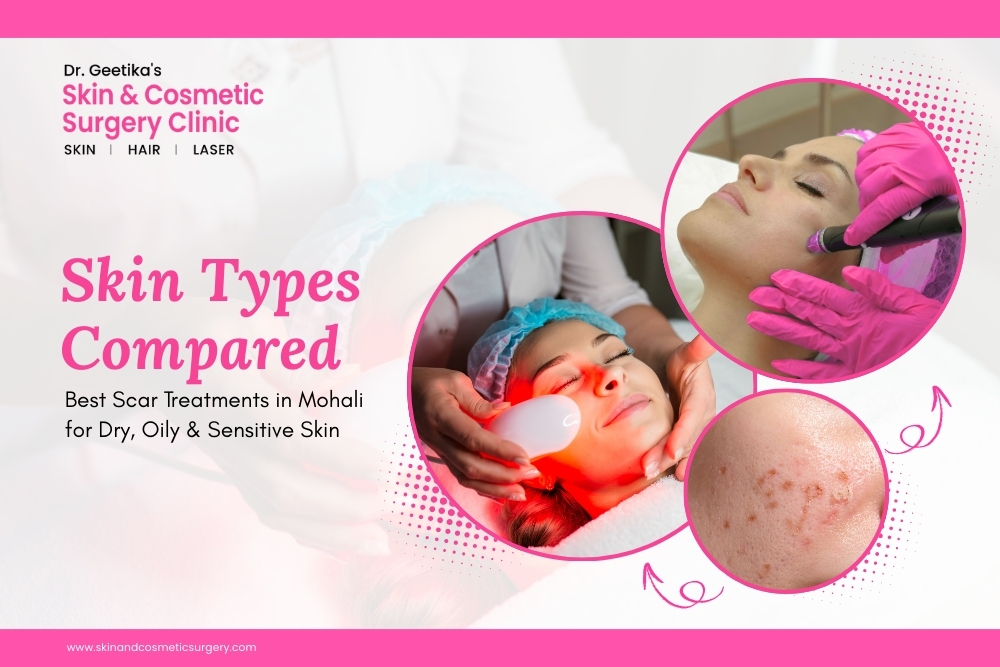
Scar treatments are not a one-size-fits-all solution–especially when your skin type plays such a big role in how scars form, heal, and respond to treatment, especially for Scar Treatments in Mohali. Perhaps you have dry, flaky skin that leaves a mark when struck, or oily skin likely to get acne scars, or sensitive skin that reacts to just about everything, and you are at a loss for how to find the right one.
We will contrast the way various skin types react to scars and how to find specific solutions to the issue in this guide using current dermatology. Medically-related processes to supporting skincare, you will have a better understanding of treatments that could work best on your specific skin.
Understanding Scar Treatments in Mohali Based on Skin Type
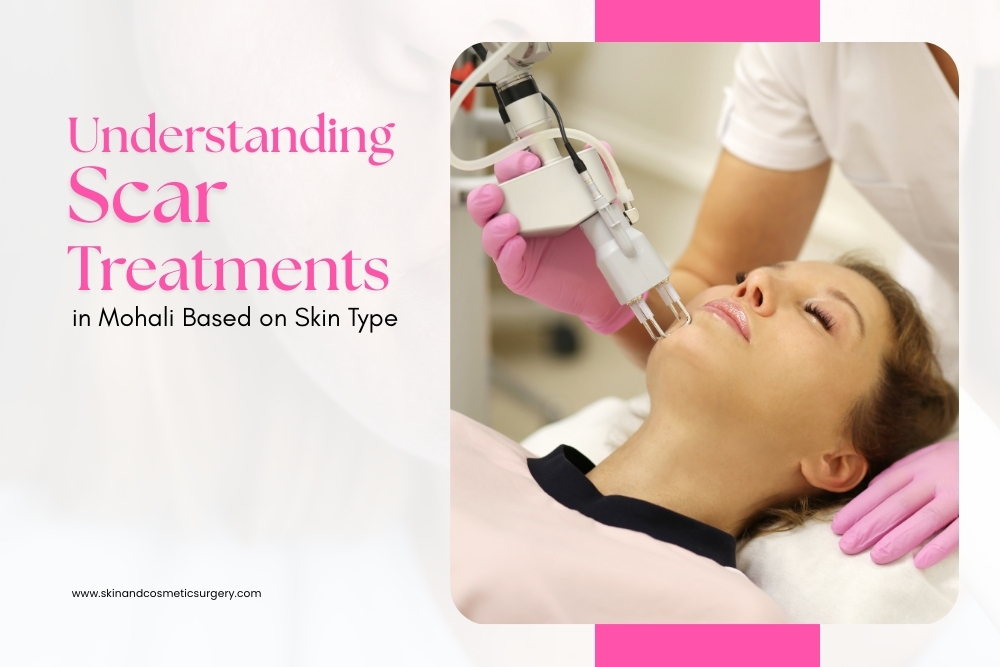
When Dermatologists give Scar Treatments, they tend to start by first examining your skin type and scar type as a combination. That is due to the fact that what works wonders on acne, greasy skin might prove to be too aggressive for delicate or dry skin.
Common Types of Scars
We will discuss the skin types, but before we do that, we will take a quick look at the scars themselves:
- Acne Scars: May either be pitted (ice pick, rolling, boxcar) or pigmented spots.
- Hypertrophic & Keloid Scars: These are thick, raised scars that are elevated above the surface of the skin.
- Post-Surgical or Injury Scars: Linear scars that remain after incisions, burns or surgeries.
- Stretch Marks (Striae): They are a form of scarring that may develop due to rapid skin stretching.
The various types of scars require dissimilar approaches, such as laser, microneedling, peels, injections, or minor operations. The aggressiveness with which these can be used is dependent on your skin type.
Scar Treatment of Dry Skin
Dry skin appears unattractive, tight and easily fissured. It could be rough, flaky, and more prominent when it is scarred due to the absence of moisture and the strength of the barrier.
Problems of Scar Treatment on Dry Skin
- Increased irritability and peeling.
- Skin barrier is already impaired.
- More hydrating formulas are required.
- Certain cruel processes would aggravate desiccation.
Recommended Treatment Options
For dry skin, Scar Treatments in Mohali usually focus on repairing the barrier while gently improving scar texture and colour. Some of the options, which are generally recommended, are:
- Fractional Laser Resurfacing (use with caution settings): This method is used to smooth the texture and promote collagen, but it needs to occur in combination with post-laser hydration.
- Hydrating Serums Microneedling: Microscopic needles stimulate the generation of collagen with serums such as hyaluronic acid, maintaining hydration.
- Chemical Peels (Mild to Medium): Lactic acid or mild peels containing small amounts of other acids could be applied to the skin to brighten and smooth skin colour and texture without causing excessive skin peeling.
- Topical Therapies: Retinoid, ceramide, and lightening topicals applied by the dermatologist assist in lessening the appearance of the scar tissue.
Home Care Guide to Dry Skin with Scars
- Apply a cream-based cleanser as opposed to rough foaming products.
- Use thick moisturisers containing such ingredients as ceramides, glycerin and shea butter.
- Scars are aggravated by excess scrubbing, so avoid over-exfoliating.
- Staying out of the sun without sunscreen increases pigmentation.
Best Scar Treatments in Mohali for Oily & Acne-Prone Skin
Oily skin will also have difficulty in fighting active acne and scars left behind, most of them being pits, marks and larger pores. This group often seeks Scar Treatments in Mohali to address both breakouts and their aftermath.
Scarification difficulties on Oily skin Treatment
- Often, escapes may slow down treatment.
- Increased post-inflammatory hyperpigmentation (PIH).
- Skin can withstand more vigorous treatment, yet still requires some balance.
Recommended Treatment Options
In the case of oily or acne-prone skin, dermatologists can recommend:
- Microneedling / Dermaroller Treatments: Assistance in softening pitted scars and texture in general due to regulated injury and collagen production.
- Fractional CO2 or Erbium Lasers: Indications are that these laser types are used to resurface deep acne scars and refine pores in treatments completed in sessions with a good gap and aftercare.
- Chemical Peels (Salicylic, Glycolic, TCA in controlled concentration): Attack active acne and pigmented scars at the same time.
- Subcision: This is a small surgical procedure that is done to loosen tethered rolling scars to elevate the skin surface.
Endorsing Lifestyle and Skincare for Oily Skin
- Apply non-comedogenic products to prevent clogged pores.
- Keep a simple regimen: mild cleanser, light moisturiser, acne contraception, and sun block.
- Picking and squeezing pimples should be avoided, as this leaves more scars.
- Always do as your dermatologist wants; scars take time to heal.
Scar Treatment Plans in Mohali for Sensitive Skin
The skin is sensitive, and she reacts fast; there is redness, burning, itching, and stinging. That complicates the treatment of scars since the skin might not be comfortable with most of the conventional treatments.
Problems of Sensitive Skin
- Increase in the risk of irritation and inflammation.
- Potential anaphylaxis or sensitivity to some products.
- Mandatory gentle, stepwise therapy as opposed to violent therapy.
Recommended Treatment Options
For sensitive skin, dermatologists typically adapt Scar Treatments in Mohali to be slow, cautious, and soothing:
- Low-Intensity Lasers and Light-Based Therapies: Non-ablative lasers or IPL can be used to treat redness, pigmentation, and limit damage.
- Light Microneedling: It has fewer passes and calming serums to minimise the inflammation.
- Mild Peels Only: Delicate peels that contain calming substances, provided that they are tolerated.
- Topical Remedies with Relaxing Ingredients: e.g., niacinamide, allantoin, panthenol and brightening agents that are accepted by the dermatologist.
Sensitive Skin Care Essentials
- Contact Testing: Before commencing new products, it is always important to do a patch test.
- Do not use a fragrance-heavy formula or an alcohol based formula.
- Be as routine and as barrier-oriented.
- Consult a specialist rather than treat the scars yourself in cruel DIY processes.
How Dermatologists Personalise
There are no two cases of scar that are exactly the same, even with the same type of skin. A dermatologist considers:
Notable Issues in Treatment Planning
- Scar type: Raised, depressed, pigmented, mixed.
- Skin Type/Tone: Dry, oily, combination, sensitive, and response to procedures.
- Age of Scar: The result of the newer scars can be different from the old ones.
- Later History: Acne, allergies, medications, and hormonal factors.
According to this, your doctor can use several approaches together, namely:
- Peels + Microneedling
- Subcision + Laser
- Topical creams + Mild devices
Much of this stratification has been found to produce more natural-appearing changes over time.
When to Consider Professional Scar Treatments in Mohali
You may seek the assistance of a professional when:
- Scars have an impact on your trust in life.
- There is no real difference between over-the-counter creams.
- You perceive an aggravation of the pigmentation or hardening of the scars.
- You do not know what type of treatment is safe for your skin.
An effective schedule that includes a dermatologist helps to conserve time, avoid errors, and keep your skin barrier intact.
Conclusion
Scars may tell a story—but they don’t have to define how you feel about your skin. Whether you have dry, oily, or sensitive skin, modern Scar Treatments in Mohali offer customised solutions that can soften, fade, or significantly improve the appearance of scars. The key is understanding your skin type, respecting its limits, and choosing treatments that balance effectiveness with safety.
For individuals who want expert guidance and a tailored treatment pathway, consulting a qualified dermatologist is the most reliable step forward. At the end of the day, the right plan can help you move from covering scars to feeling comfortable in your own skin.
For compassionate, expert-led care and thoughtfully designed scar solutions, you can consider consulting Dr Geetika at Skin & Cosmetic Surgery Clinic for a professional evaluation and personalised treatment plan.
FAQs
Q1. How many sessions are usually required for visible scar improvement?
Ans. Most people need 3–8 sessions, depending on scar type and skin type.
Q2. Are scar treatments different for the face and body?
Ans. Yes. Face treatments are usually gentler; body scars may need stronger procedures.
Q3. Can home remedies completely remove scars?
Ans. No. Home remedies may soften scars slightly, but cannot remove them completely.
Q4. Is there a risk of scars getting worse after treatment?
Ans. If done incorrectly or too aggressively, yes. With a qualified dermatologist, the risk is low.
Q5. How important is sunscreen after scar treatment?
Ans. Very important. Sunscreen prevents scars from darkening and protects healing skin.