


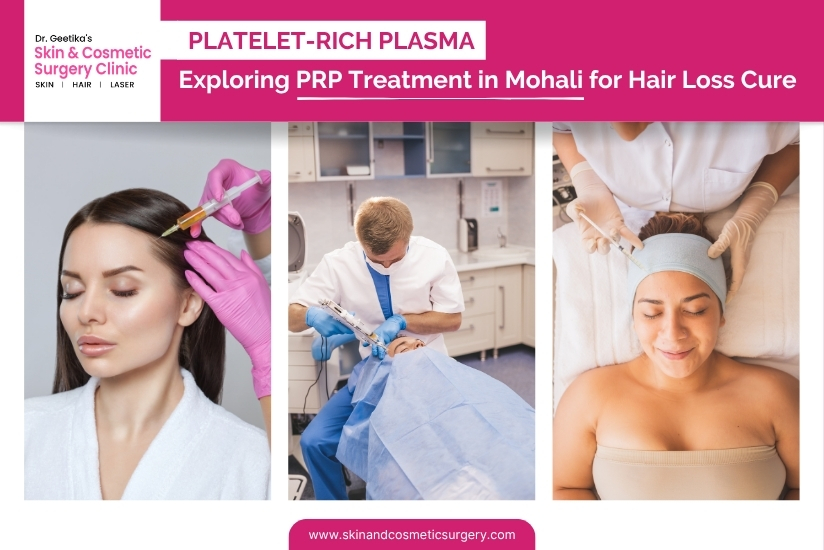
Hair loss is one of the most searched health concerns in India. And honestly, most content out there either oversimplifies it or drowns you in medical jargon.
This blog is neither.
It discusses PRP, including what it does biologically, who it can assist, what happens during the operation, and what realistic results look like.
If you’re thinking about getting PRP treatment in Mohali, this is a great place to start.
What Exactly Is PRP?
Your blood has four parts. Red cells, white cells, plasma, and platelets.
Most people know platelets help with clotting. What fewer people know is that platelets also carry growth factors – proteins that instruct the body to repair damaged tissue and regenerate cells.
PRP is an acronym for platelet-rich plasma. It is created by taking a tiny sample of your blood, centrifuging it to separate the layers, and then removing the platelet-richest portion. After that, the concentrated plasma is injected right into the hair follicles on your scalp.
Harvard Health research indicates that platelets delivered at this depth can activate dermal papilla cells. These cells play a direct role in regulating hair growth. Follicles that have been weakening or going dormant may be stimulated back into activity.
Nothing synthetic goes into your body. It is entirely your own blood, processed and reinjected.
Does PRP Treatment in Mohali Work for Everyone?
Short answer, no.
Longer answer, it depends heavily on the type of hair loss and how early you act.
The most consistent clinical results come from patients with androgenetic alopecia. That is the hormonal, genetic type. Men typically lose hair at the crown or hairline. Women see a widening part and overall thinning on top.
Caught early or mid-stage, PRP can meaningfully slow that process and in good candidates, partially reverse it.
Other types like alopecia areata or telogen effluvium? The evidence is mixed. Some patients see improvement. Others do not. It would be misleading to make broad claims here.
What genuinely matters and this cannot be overstated is timing. PRP stimulates existing follicles. It cannot resurrect follicles that have been gone for years. A scalp that has fully scarred over will not respond. Waiting too long is the single biggest mistake patients make.
What Happens During a PRP Session?
No surgery. No sedation. You walk in and walk out.
Blood draw: A small sample from your arm. Takes minutes.
Processing: The sample goes into a centrifuge. High-speed spinning separates the blood into layers. The platelet-rich layer is extracted. Sometimes a second spin is done to increase platelet concentration.
Injections: PRP is injected across thinning areas of the scalp. Multiple small entry points. Numbing cream is applied beforehand. Discomfort is mild for most people.
Each session runs 45 to 60 minutes.
Three sessions total – one per month for three months – is the standard starting course. After that, maintenance every three to six months. Miss the maintenance and the hair loss tends to return gradually. PRP does not fix the root cause. It manages it.
PRP and Hair Transplant: Not the Same Thing
A lot of patients come in thinking these are competing options. They are not.
At our hair transplant clinic in Mohali, clarifying this difference is almost always part of the first conversation.
PRP does not relocate hair. It works with what is already on your scalp – supporting weakening follicles, reducing shedding, improving thickness over time. No surgery. No recovery period.
Hair Transplant in Mohali is a surgical procedure. Follicles from a donor area are physically moved to where hair has been permanently lost. Recovery takes weeks. Results, when done well, are lasting.
Here is what most patients do not know going in – the two are regularly combined. PRP before a transplant strengthens the scalp and existing follicles. PRP after surgery supports graft survival and improves healing. Used together, outcomes are generally better than with either treatment alone.
Which path makes sense depends entirely on where your hair loss currently stands. That is not something a blog can determine. A proper consultation can.
Timeline: When Do Results Actually Show Up
Weeks 4 to 6: Shedding slows down noticeably. Fewer hairs on the brush or pillow. For most patients, this is the first real sign something is changing.
Months 3 to 4: Hair starts feeling different. Thicker. Strands seem stronger. Some new growth appears near the hairline or along the parting.
Month 6: This is the proper evaluation point. Density, coverage, and overall improvement are assessed here.
Results differ between patients. Some respond exceptionally well. Others see moderate gains. A smaller group sees limited change. Any clinic promising specific outcomes before examining a patient is not giving you honest information.
Safety Profile of PRP Treatment in Mohali
The primary reason PRP is considered safe is straightforward – it uses your own blood. No foreign material, no synthetic compounds, so allergic reactions are extremely unlikely.
Side effects do occur but are mild and short-lived. Scalp soreness for a day or two. Some swelling. Occasional headache. A brief shedding increase after the first session is not unusual, it settles on its own within a few weeks.
Serious complications are rare when treatment is carried out by a qualified doctor.
However, not everyone should use PRP. Individuals who are taking blood thinners, have autoimmune diseases, have active scalp infections, or have clotting abnormalities should not proceed without a thorough medical evaluation. It’s also unlikely that advanced hair loss with inactive follicles for years will be very beneficial.
Getting assessed properly before starting is not optional. It is the foundation of a good outcome.
Thinking About Getting PRP Treatment in Mohali? Start Here
Going to a clinic without a proper evaluation first is how people end up disappointed and out of pocket.
Dr. Geetika Paul is a qualified dermatologist in Mohali with hands-on experience managing both surgical and non-surgical hair loss. Every patient undergoes a proper scalp assessment before any treatment recommendation is made.
PRP alone, a transplant, or a combination – the right answer depends on your specific situation. Book a consultation to get a clear, honest picture of where things stand.
Frequently Asked Questions
Q1. How many PRP sessions are needed to see results for hair loss?
Ans. Three sessions is the standard course, spaced four weeks apart. Shedding reduction is usually noticeable after the first or second session. Density improvement follows around month three to four. Maintenance sessions every three to six months are needed after the initial course to hold results.
Q2. Is PRP a permanent cure for hair loss?
Ans. No and that needs to be stated plainly. PRP slows hair loss and supports follicle health. It does not permanently stop it. Androgenetic alopecia is a chronic condition. Maintenance is not optional if you want to keep the results going.
Q3. Does PRP treatment hurt?
Ans. Numbing cream is applied to the scalp before injections begin. Most patients describe mild discomfort, not pain. No recovery time is needed. Daily routine continues normally after each session.
Q4. When will I see results after PRP treatment?
Ans. Reduced shedding is usually the first indicator – around weeks four to six. Visible thickness and density improvement typically comes between months three and four. The six-month mark is when a full assessment of the initial course is done.
Q5. Can PRP be combined with a hair transplant in Mohali?
Ans. Yes, and it is done regularly. PRP before surgery prepares the scalp and supports existing follicles. PRP after surgery helps grafts take and heal faster. Most hair restoration specialists recommend the combination for better outcomes.
Q6. Who is not suitable for PRP hair treatment?
Ans. Candidates are typically excluded if they have autoimmune diseases, bleeding or clotting issues, active scalp infections, or are using anticoagulants. Significant improvements are also improbable for patients with chronic progressive hair loss in which follicles have been dormant for years. Before beginning, a dermatological evaluation is crucial.
Q7. How do I find the best hair transplant clinic in Mohali?
Ans. Select a skilled dermatologist, such as Dr. Geetika Paul, who provides a thorough scalp examination and specialises in hair restoration. Steer clear of clinics that encourage hasty decisions or guarantee outcomes. Put expertise and long-term results first.