

Between changing weather across the Tricity, intense summer sun exposure, and long hours spent in air-conditioned spaces, keeping your skin clear and glowing is a constant balancing act. Most of us try to handle dry patches, sudden dullness, or stubborn T-zone oiliness with a cabinet full of home serums or by booking traditional salon facials. But let’s be honest: nobody wants to leave a salon with red, burning skin from painful manual extraction or scrubbing.
This exact gap is why the HydraFacial in Mohali has gained massive popularity among busy professionals, brides-to-be, and anyone wanting a reliable skin reset. Rather than relying on steam and harsh physical scrubbing, it offers a medical-grade alternative, leaving you with an immediate glow and zero recovery time.
If you’ve been considering trying it out and wondering if it’s actually worth the investment, here is a complete breakdown of how the procedure works, local pricing, and what you should know before booking your appointment.
So, What Exactly Is a HydraFacial?
HydraFacial is a medical-grade skin rejuvenation treatment that bridges the gap between a relaxing spa facial and an advanced clinical procedure.
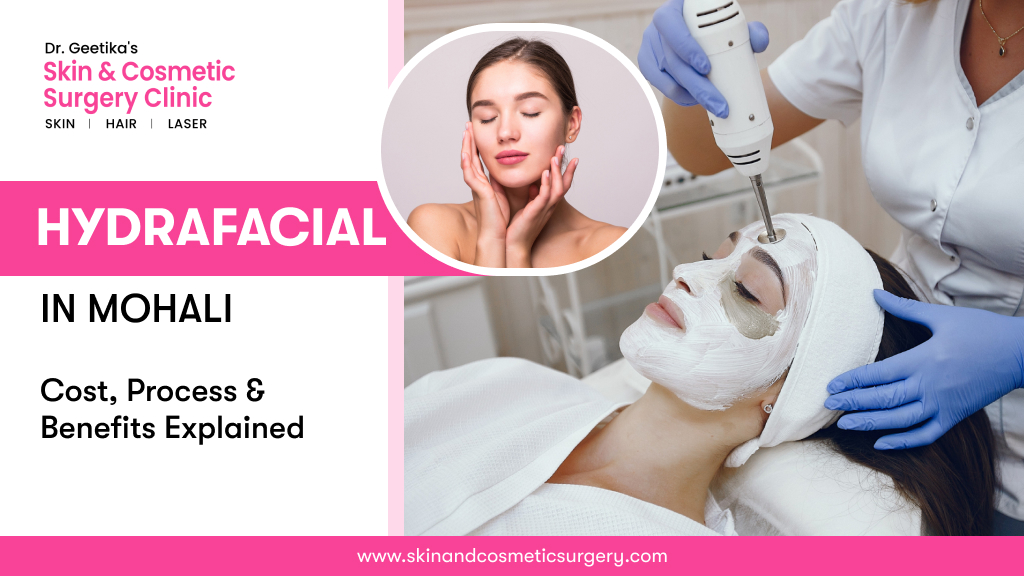
Instead of relying on creams, warm steam, or someone manually squeezing your skin, a HydraFacial uses a specialized device powered by patented Vortex-Fusion technology. Think of it as a dual-action system: while a gentle liquid vacuum lifts away dead cells, excess sebum, and trapped impurities from your skin, it simultaneously drives active, highly concentrated serums (like hyaluronic acid and antioxidants) deep into your cleared pores.
Because it uses fluid motion rather than harsh scrubs or metal extraction tools, you get the deep-cleansing benefits of a mild chemical peel and microdermabrasion, but without the stinging, raw skin, or days of flaking afterward.
What Happens During a HydraFacial Session?
A typical HydraFacial session takes around 30 to 45 minutes. Whether you’re squeezing it in during a lunch break or running errands around Phase 10 or Sector 70, you can easily walk in and out without needing hours to look normal again.
The procedure follows four distinct, sequential steps:
Step 1. Cleanse & Peel:
A mild botanical and acid solution gently loosens dead surface skin cells and breaks down excess sebum without causing post-treatment flaking.
Step 2.Extract:
The vortex vacuum glides over your face, focusing on congested areas around the nose, chin, and forehead, painlessly drawing out blackheads and trapped oil.
Step 3. Hydrate & Infuse:
Once pores are cleared of debris, intense moisturizing serums rich in hyaluronic acid and peptides are driven deep into the skin layers.
Step 4. Protect & Seal:
Targeted antioxidants are applied to lock in moisture, repair environmental barrier damage, and leave a natural, non-greasy bounce.
Why Is Everyone in Mohali Swapping Regular Facials for HydraFacial?
Beyond the immediate visual perk of glowing skin, a HydraFacial actively improves skin function over time.
- No Downtime: You don’t have to stay home waiting for red spots to subside. You can step out for dinner or a work meeting immediately after.
- Pain-Free Extraction: If you dread the nose-pinching part of a traditional facial, you’ll appreciate the vacuum technology. It clears pores effortlessly without squeezing.
- Better Serum Absorption: By removing the top barrier of dead skin and sebum, your daily at-home products (like Vitamin C or hyaluronic acid) penetrate much more effectively in the weeks following your treatment.
- Highly Customizable: Serums can be swapped or upgraded depending on whether your primary concern is stubborn oiliness, sudden dryness, or early fine lines.
How Does It Compare to Chemical Peels or Microdermabrasion?
While chemical peels rely purely on acids to shed top skin layers and microdermabrasion uses fine crystals to physically abrade the skin, HydraFacial combines hydro-exfoliation with immediate nutrient infusion. This means you get the pore-refining benefits of a mild peel and the smoothing effects of microdermabrasion, but without the stinging, redness, or multi-day skin shedding.
Who Benefits the Most?
A HydraFacial works well for almost all skin types and ages, making it ideal if:
- Your skin feels dull, fatigued, or rough to the touch.
- You struggle with persistent blackheads, whiteheads, or enlarged pores in your T-zone.
- You have a wedding, party, or family event coming up in a few days and need a reliable skin boost.
- You want a proactive way to manage fine lines and early skin aging without invasive procedures.
A quick clinical note: If you currently have an active, inflamed cystic acne breakout, open rosacea flare-ups, or a rash, it’s best to let a dermatologist evaluate your skin first. Suction on heavily inflamed lesions can sometimes spread bacteria or worsen irritation.
What Does a HydraFacial Cost in Mohali?
When it comes to the HydraFacial price in Mohali, it generally ranges between ₹4,000 and ₹12,000 per session.
Why the price gap? It usually comes down to three main factors:
| Cost Factor | What You Should Know |
| Authenticity of Equipment | Original, medical-grade HydraFacial MD devices yield safer, consistent results compared to unbranded replica suction units. |
| Targeted Boosters | Adding specialized serums, such as growth factors for collagen, brightening agents for pigmentation, or anti-aging peptides, will increase the base price. |
| Clinic vs. Salon Setting | Medical dermatology clinics offer physician-supervised care with strict sanitization protocols, ensuring you don’t risk skin barrier damage or infection. |
While it can be tempting to go with the cheapest hydrafacial treatment cost available, it’s worth remembering that skin treatments involve direct contact with your face, and outcomes are closely tied to the expertise of the person performing the treatment and the quality of products used. Choosing a qualified dermatologist over an unverified or unlicensed provider is an important factor in getting safe, consistent, and long-lasting results.
Why Choose Dr. Geetika’s Skin & Cosmetic Surgery Clinic?
When it comes to your face, device quality and practitioner oversight matter just as much as the treatment itself. At Dr. Geetika’s Skin & Cosmetic Surgery Clinic, aesthetic care is always grounded in medical expertise.
- Dermatologist-Led Evaluation: Guided by Dr. Geetika Paul, every treatment starts with a careful analysis of your skin type, ensuring a HydraFacial is genuinely suitable for your current skin state.
- Medical-Grade Hygiene: The clinic adheres to strict clinical sterilization standards, removing any risk of cross-contamination from shared machine tips.
- Personalized Serum Protocols: Rather than running a standard preset, serum choices and suction strength are customized based on whether you’re combating oiliness, sun damage, or dryness.
Want to check if it’s right for your skin type? Reach out to Dr. Geetika’s Skin & Cosmetic Surgery Clinic for HydraFacial in Mohali to book a consultation, ask your questions, and get a skin plan tailored specifically to you.
FAQs
Q1. Is HydraFacial painful?
Ans. No, HydraFacial is a completely painless treatment. Most people describe the sensation as gentle and relaxing, with no discomfort during the extraction or hydration steps.
Q2. How many sessions are needed for visible results?
Ans. Many people notice a visible glow after just one session. However, for concerns like pigmentation or acne scars, a series of sessions, typically spaced a few weeks apart, is often recommended for more lasting improvement.
Q3. How long do the results last?
Ans. Results usually last anywhere from one to two weeks, depending on your skin type, lifestyle, and skincare routine. Regular sessions help maintain longer-lasting results.
Q4. Can HydraFacial help with acne scars or pigmentation?
Ans. Yes, HydraFacial can help improve the appearance of mild acne scars and pigmentation over time, especially when done consistently and combined with a dermatologist’s guidance.
Q5. Is there any downtime after the treatment?
Ans. There is no downtime involved. You can return to your regular activities immediately after the session, making it a convenient option even on a busy schedule.
Q6. How often should I get a HydraFacial?
Ans. For general maintenance, once a month is a common recommendation. However, the ideal frequency can vary based on your skin’s condition and goals, so it’s best to consult your dermatologist for a personalised plan.