


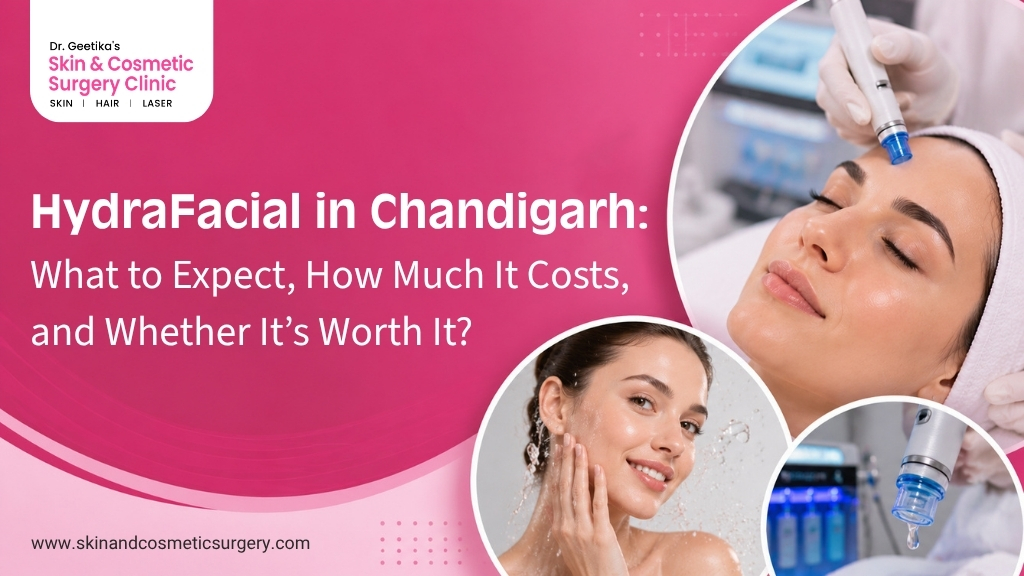
Ask anyone who’s gotten a HydraFacial in Chandigarh before a wedding and they’ll probably show you the skin. But ask them what it cost, what the session was actually like, or how long the results lasted and you’ll get five different answers.
So let’s sort that out properly. No sales pitch. Just what you actually need to know before spending money on it.
Why Chandigarh Skin Needs More Than Just a Regular Facial?
Step outside in May and you’ll understand the problem immediately. The heat alone is brutal – temperatures regularly cross 44°C. Add the dust blowing in from the surrounding plains, the industrial pollution from Mohali and Derabassi, and the kind of dry winters that crack your lips before December even starts. Your skin is dealing with a lot.
A standard parlour facial can’t keep up with that. It cleans what’s on the surface. The grime that’s worked its way into your pores? The moisture your skin loses just commuting in that heat? A regular facial doesn’t touch either of those.
The American Academy of Dermatology has documented how repeated UV exposure and pollution together break down the skin barrier faster than either does alone – accelerating dullness, pigmentation, and premature ageing. That’s a Chandigarh reality. It’s part of why HydraFacial in Chandigarh specifically has become so popular – the treatment pulls debris out while simultaneously pushing repair serums in. It addresses both problems at once.
First Session vs. Third Session: What Actually Changes?
“You’ll see results immediately” – every clinic says this, and it’s technically true. But it leaves out what happens after that. The fuller picture matters more.
1. After Your First Session
Skin looks visibly cleaner. Brighter, too. The kind of brightness that makes people ask if you’re well-rested. Pores sit smaller, hydration feels different – not the surface-sticky kind you get from a cream but something that’s actually gone into the skin.
No redness on the way out. No peeling two days later. Most people go straight back to work or head to an event the same evening. The result is real but it’s still your skin looking its cleanest, not yet a structural improvement.
2. After Your Second Session
Somewhere around here, the change stops being a day-of thing. Skin holds moisture better across the week. Blackheads come back slower, and in smaller numbers. If texture unevenness was your concern, you start noticing it smoothing out between sessions rather than just on treatment day.
3. After Your Third Session
Fine lines genuinely soften. Sun spots fade. Pore size reduces – not just temporarily from a good cleanse, but measurably smaller over time. Patients at this stage often say their skin just looks healthy, even on days when they’ve done nothing special to it.
A single session before a big event? Works perfectly. But if you want skin that actually behaves differently – holds moisture, stays clearer, looks brighter without effort – three sessions is where hydra facial in Chandigarh earns the price tag.
How Much Does HydraFacial in Chandigarh Cost in 2026?
Prices vary quite a bit across clinics. What you pay depends mostly on which version of the treatment you get and where you book it. Here’s how the tiers generally break down:
| Session Type | What’s Included | Price Range (2026) |
| Signature HydraFacial | Cleanse, exfoliate, extract, hydrate | ₹4,500 – ₹6,000 |
| Deluxe HydraFacial | Signature + LED therapy + 1 booster | ₹6,000 – ₹8,000 |
| Platinum HydraFacial | Deluxe + lymphatic drainage + 2 boosters | ₹8,000 – ₹12,000 |
Three things separate a ₹5,000 session from a ₹2,000 one and it’s not just branding:
- The machine itself. A certified HydraFacialMD device uses patented Vortex-Fusion technology and proprietary serums. Cheaper “hydra dermabrasion” machines are sold widely to salons and look nearly identical but the mechanics are different and the fluids are generic. Worth asking your clinic directly which one they use.
- Serum quality. Boosters for pigmentation, ageing, or congestion cost more but they’re targeted. A base session doesn’t include these.
- Who’s doing it. A trained dermatologist or certified aesthetician is not the same as a salon technician who had a weekend training. The difference shows up in how the treatment is customised for your skin type.
Anything priced below ₹2,500 at a salon is almost certainly a clone machine with off-brand fluids. You might get a mild glow. You probably won’t get clinical results and on sensitive skin, poorly chosen serums can cause irritation.
Who Gets the Most Out of HydraFacial?
Honestly, it suits a wide range of skin types but it works best for specific concerns. If any of the following sound familiar, you’re a strong candidate:
- Skin that looks dull no matter what you put on it
- Enlarged or congested pores – very common in Chandigarh summers
- That tight, uncomfortable feeling after washing your face (chronic dehydration)
- Patches of pigmentation or sun damage that aren’t budging with creams alone
- Oily skin that breaks out cyclically, especially around the jawline
Skin tone matters too. For darker Indian complexions – Fitzpatrick types III to VI – HydraFacial is genuinely one of the safer clinical options. Treatments that use heat or harsh abrasion can trigger post-inflammatory pigmentation on deeper skin tones. This one doesn’t.
That said, if you’re dealing with active rosacea, eczema flares, or open skin, a conversation first is worth it. The best dermatologist in Mohali can modify the serum selection or suggest a better starting point.
If pigmentation is your core issue, pairing it with anti-acne and pigmentation treatment often gets better results than HydraFacial alone.
Is HydraFacial Worth It? An Honest Take
Spend ₹1,000 at a parlour every week and you’re at ₹4,000 a month. One hydra facial in Chandigarh at a dermatologist clinic runs ₹4,500–₹6,000 for the standard version. The maths aren’t that far apart but what you’re getting is quite different.
| HydraFacial at a Dermatologist Clinic | Regular Parlour Facial |
| Works at the pore level | Surface-level cleansing only |
| Medical-grade serums with actives | Generic massage creams |
| No downtime, clinical precision | Variable quality, manual extractions |
| Results visible after 1 session; better with 3+ | Temporary glow, fades quickly |
| ₹4,500–₹8,000/session | ₹800–₹1,500/session |
Pre-event glow with zero recovery time – yes, one session does that well. But if your skin has an actual problem you want fixed, monthly sessions over 3 months is where the clinical difference becomes hard to ignore.
And if your skin is generally fine and you’re mainly looking for relaxation – a parlour facial is perfectly reasonable. HydraFacial isn’t a necessity for everyone. It’s most worth it when your skin concern is real and consistent skincare alone isn’t cutting through it.
How Often Should You Get a HydraFacial?
Monthly for the first three months – that’s the standard recommendation to build any real baseline. After that, once every 6–8 weeks keeps the improvement going without overdoing it.
Between sessions, the home routine is simple: SPF 50+ every morning without fail (Chandigarh’s sun makes skipping this expensive), a gentle cleanser, and hyaluronic acid if your skin runs dry. Hold off on retinol or AHA products for 48 hours before your next session.
If you want to combine treatments, HydraFacial pairs well with photo facial for pigmentation or RF tightening for skin laxity. Any best dermatologist in Mohali worth trusting will space these out sensibly – not layer everything into one visit just to increase the bill.
Conclusion
A HydraFacial treatment can genuinely transform your skin but your results depend on choosing the right clinic and staying consistent. Think of it like going to the gym. If you don’t hydrate, stretch, or eat well after a workout, you won’t see results. Your face deserves the same care.
And if you’re in or around Mohali, trust your skin in the hands of an expert. Dr. Geetika at Skin & Cosmetic Surgery Clinic offers this treatment backed by clinical expertise, personalised skin plans, and safe, effective techniques to keep your skin radiant long after the session ends.
Frequently Asked Questions
Q1. How many sessions do I need before I see a real difference?
Ans. After the first session, skin looks cleaner and brighter – that part is immediate. Texture improvement, reduced pore size, and fading pigmentation take about three monthly sessions to show up consistently. Once you’re there, once every 6–8 weeks holds the result.
Q2. Is hydra facial in Chandigarh safe for sensitive skin?
Ans. Generally, yes – it’s one of the milder clinical facials precisely because there’s no heat, no ablative action, and no manual squeezing involved. That said, very reactive skin still needs a pre-session consultation. Serum choices matter a lot for sensitive types and a good dermatologist will adjust accordingly.
Q3. How do I know if a clinic is using an authentic HydraFacialMD machine?
Ans. Just ask. Certified machines use patented Vortex-Fusion tips and come with official serums from the HydraFacial brand. Clone machines look similar in photos but use different mechanics and generic fluids. A clinic using the real device will say so without hesitation and usually show you the machine.
Q4. Can I book a HydraFacial in Chandigarh right before my wedding?
Ans. Yes, but give it 5–7 days before the event – not the day before. Skin needs about 48 hours to fully settle and show the glow at its best. If you’re serious about bridal skin, three monthly sessions leading up to the date is the approach most skin doctors recommend.
Q5. What does HydraFacial not fix?
Ans. Deep acne scarring, cystic acne, and significant skin laxity are beyond what this treatment can do on its own. For those concerns, you’d likely need laser resurfacing, RF therapy, or a combination approach. A skin consultation will tell you quickly whether HydraFacial is the right starting point or whether something else makes more sense.
Q6. Is there any downtime?
Ans. None. Possibly a bit of redness for an hour after – that’s it. Makeup goes on immediately. Most patients head straight to meetings, events, or out for dinner the same day. It’s one of the few clinical treatments where zero recovery time is actually accurate, not just marketing language.